At Atlantic Shark Expeditions (ASE), every trip out to sea goes deeper than just the thrill of cage diving. Behind each expedition is a purpose: advancing shark science and conservation. We work in close collaboration with the Shark Research Foundation Inc. (SRF), a nonprofit research organization dedicated to shark conservation science.
What Is the Shark Research Foundation?
The Shark Research Foundation Inc. is a registered not-for-profit organization dedicated to increasing scientific knowledge, improving public perception, and promoting the conservation of sharks through research and education.
What Kind of Work Does SRF Do?
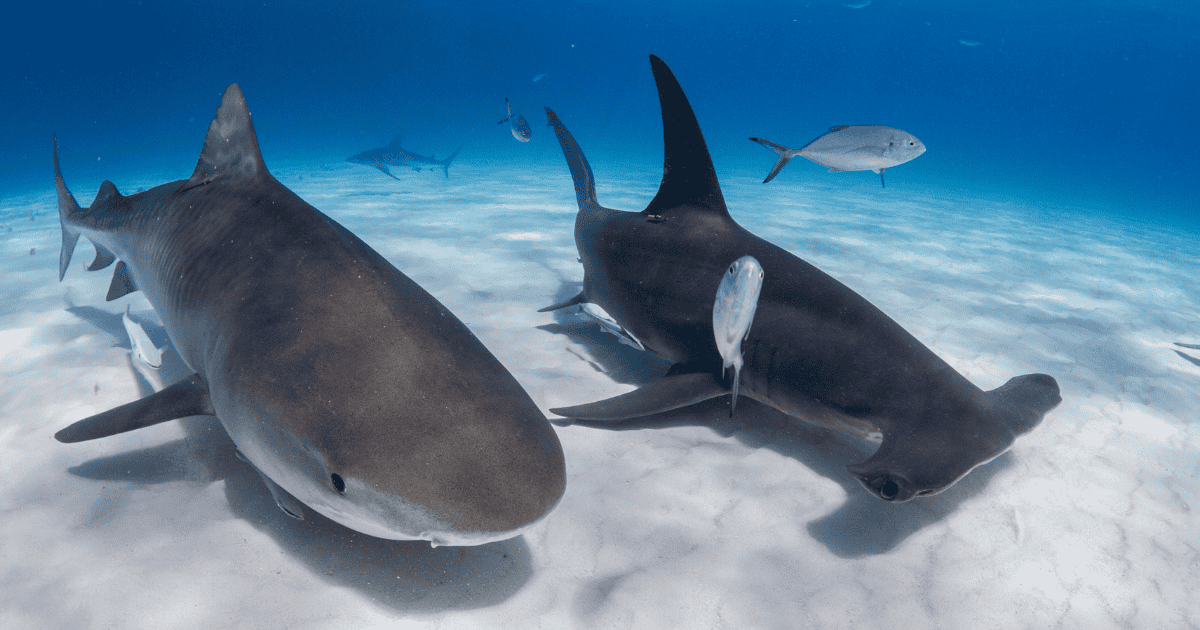
SRF leads research to better understand how sharks—and the ecosystems they help regulate—are responding to growing human pressures like climate change, habitat degradation, and overfishing. Their key research priorities include:
- Assessing threats to shark populations from fishing and environmental change
- Uncovering ecosystem impacts tied to shark declines and recoveries
- Evaluating the effectiveness of marine protected areas for shark conservation
- Mapping shark hotspots and critical habitats
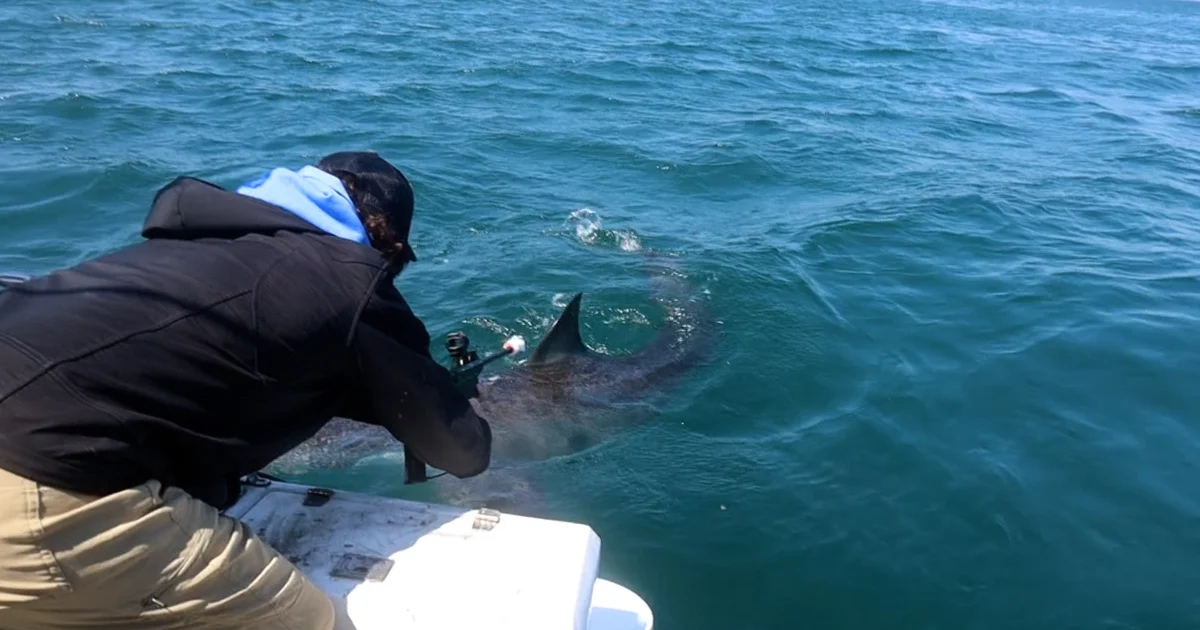
One of SRF’s current projects focuses on supporting the recovery of great white sharks in Atlantic Canada in collaboration with ASE through fieldwork conducted on our expeditions. This includes boat-based surveys to gather baseline population data and satellite tagging to track shark movement, identify critical habitat, and evaluate threats from aquaculture, tidal power, and fisheries.
You can explore where SRF-tagged sharks travel using their interactive shark tracking platform.
ASE and SRF Collaborative Research
Atlantic Shark Expeditions plays a key role as both a platform and partner for SRF. Here’s how:
1. Enabling the Science
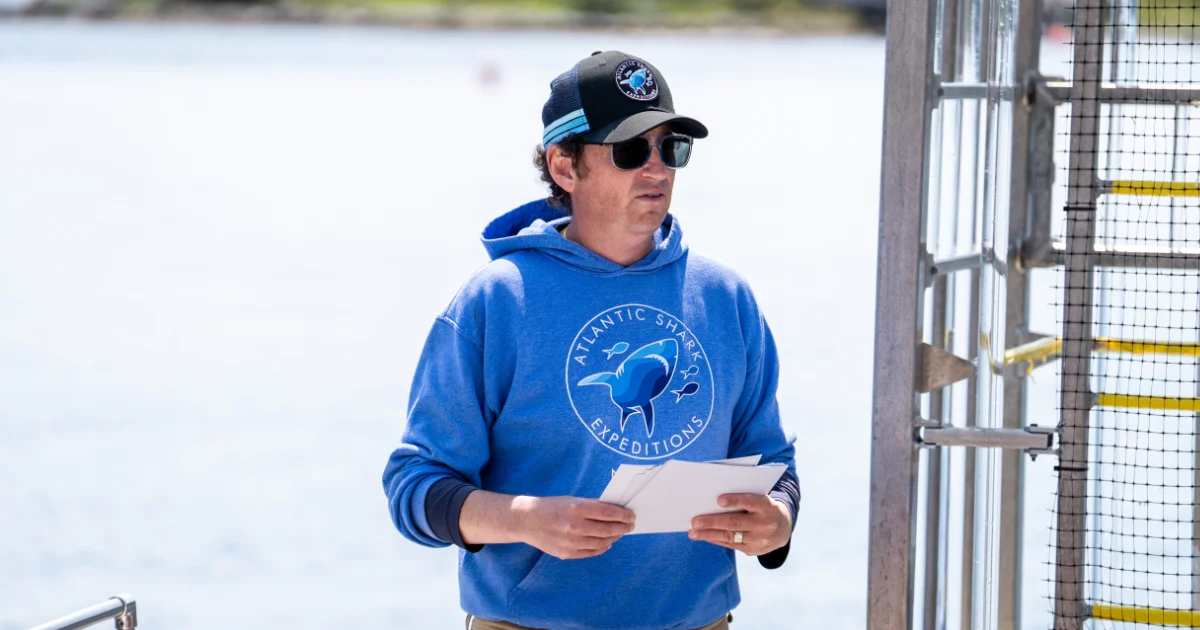
ASE expeditions contribute to SRF’s scientific mission and collaborative research. With scientific guidance from SRF Executive Director and lead scientist Dr. Neil Hammerschlag, ASE marine biologists, crew, and guests collect photos for shark identification, document sightings, and contribute field observations to track behavior and biology. ASE’s vessel is a floating research station—and the trips make that possible by providing the operational platform for collaborative shark research and education.
We also welcome other scientific partners aboard, such as researchers from Dalhousie University, who study the health of local shark populations.
And this fall, Dr. Hammerschlag will be tagging free-swimming great white sharks using non-invasive techniques during ASE trips. “The tags are provided by SRF, and deployed collaboratively by SRF and ASE scientists, while access, timing, and opportunity are made possible through ASE operations and guest participation.
2. Spreading the Message
ASE is proud to amplify SRF’s work. Through onboard education, social media, and community outreach, we help inform the public, encourage responsible engagement with sharks, and inspire donations to support research and conservation.
Want to Support Sharks? Here’s How
- Adopt a Tagged Shark: Symbolically name a shark and follow its movements via SRF’s real-time shark tracker.
- Donate to SRF: Your contribution supports SRF’s research worldwide. Donate here.
- Book a Cage Dive with ASE: Each trip provides data collection opportunities, which includes collaborative research with SRF and other scientists —and guest photos help build a long-term identification database.
- Become a Corporate Sponsor: Support ASE operations to help lower expedition costs, expand capacity, and fuel even more shark research.
Working Together for Shark Conservation
Whether you’re cage diving for science off Nova Scotia or supporting research from home, your participation matters.
Together, we’re not just watching sharks—we’re helping protect them.