A Guide for High School & College Students
Shark research is perhaps one of the most misunderstood branches of marine science. Many students imagine the daily life of a shark scientist as tagging Great Whites every afternoon, diving constantly in crystal clear water, or travelling to exotic locations. While those experiences can certainly be part of the career, the real path regarding how to become a shark researcher is much broader, more analytical, and more flexible than most people realise. This guide is for high school and undergraduate students who dream of studying sharks and want to understand the actual steps that lead to a career in shark science.
(If you are interested in becoming a marine biologist more broadly, check out our companion blog on that topic, which offers much of the same advice.)
1. Shark Research Is Not a Degree or a Standalone Science
This is the most important truth to understand when you start looking into how to become a shark researcher. There is no degree specifically in “Shark Research,” there is no “Shark Major,” and you will not find a “Shark Science Department” at most universities. Shark researchers are trained as scientists in other fundamental fields first. These specialities include:
- Ecology,
- Fisheries science,
- Animal behaviour,
- Physiology,
- Genetics and Genomics,
- Biochemistry,
- Conservation biology,
- Oceanography, and
- Evolutionary biology.
Your scientific specialty is your real credential. Sharks are simply the biological system in which you apply that specialty. This is actually good news for students. It means you do not have to focus exclusively on sharks early in your academic career. You need a strong foundation in a scientific discipline first, and then you apply it to shark biology later in your journey.
2. Key Academic Steps: How to Become a Shark Researcher
In high school, you should focus on classes that build strong scientific and analytical foundations. This includes taking biology, chemistry, physics, math (including calculus), environmental science, computer science, and English. Writing skills are particularly vital, as scientists spend a significant amount of their time writing grants, papers, and reports.
During your undergraduate years in college or university, pick a major that gives you broad, transferable scientific skills. Excellent choices include ecology, biology, fisheries science, genetics, zoology, and oceanography. To truly stand out, ensure you take courses such as:
- Statistics,
- Data analysis,
- Coding (specifically R or Python),
- GIS (Geographic Information Systems for mapping),
- Research methods, and
- Evolutionary biology.
These skills are what make you competitive for shark research. Often, having “Statistics” or “Coding” on your transcript is more valuable than having the word “Shark” on your transcript, as these are the tools you will use to actually solve conservation problems.
3. You Do Not Need to Work With Sharks Early On
There is a persistent myth that you must study or work with sharks in high school or undergrad to ever have a chance at a career. This is simply not true. Many current shark scientists spent their early years studying birds, working on freshwater fish, doing genetics on insects, or conducting physiology on mammals. What matters is that you build skills, experience, and scientific thinking. When you look at how to become a shark researcher, you see that the species is less important than the method of study. You can take those skills and apply them to sharks during graduate school or your first research job.
4. Get Experience (Even If It Is Not With Sharks)
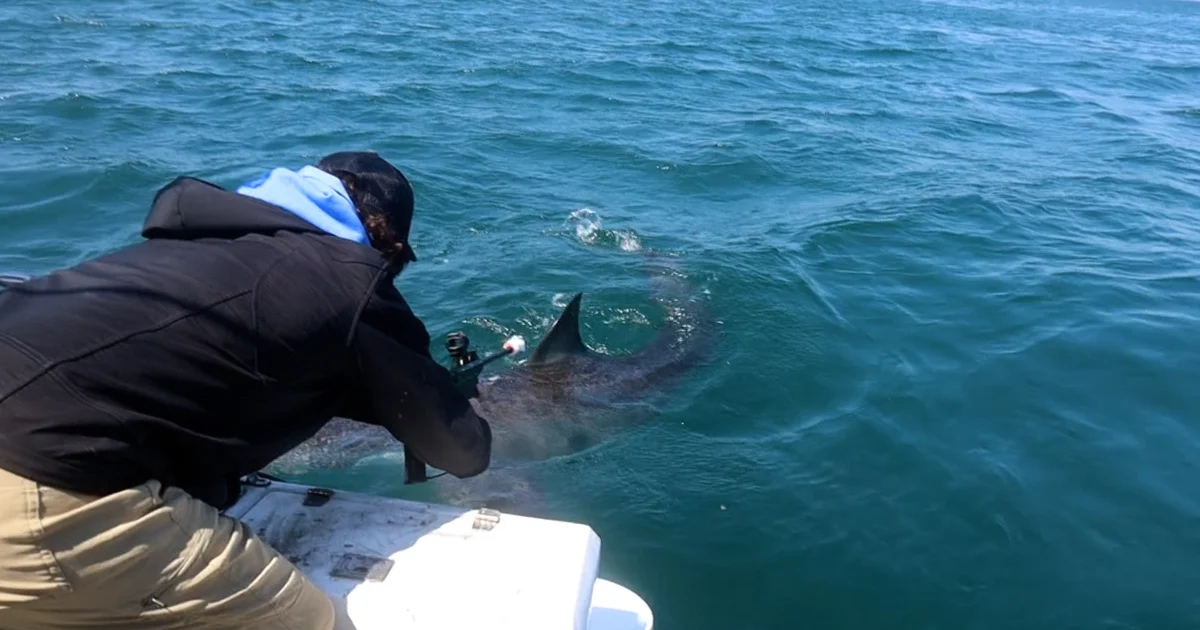
Hands-on experience shows curiosity, initiative, and commitment. Try joining any university research lab, volunteering at an aquarium, or assisting with fish and invertebrate projects. Working with any species builds transferable skills like animal handling, data collection, database management, experimental design, and fieldwork safety. These are all vital components of how to become a shark researcher in the modern era.
5. Develop Sharp Analytical Skills
Modern shark science relies heavily on statistics, data science, and modelling. You do not need to be a coding wizard, but having a beginner or moderate skill level in R, Python, or GIS makes you much more competitive. These analytical skills often matter more to a research lab than how much time you have spent on a boat, because the data collected on the boat must eventually be processed at a desk. Understanding the data side is a vital part of how to become a shark researcher today.
6. Graduate School and Finding the Right Advisor
Most shark scientists earn a Master’s degree or a PhD. Graduate school is where you finally specialise in sharks, join focused research projects, and publish scientific papers. However, the school name is less important than the advisor you choose. Your advisor provides training, helps fund your research, and introduces you to collaborators. Look for advisors who study the scientific discipline that interests you (such as movement ecology or physiology) rather than just the species you like.
7. Shark-Related Careers Beyond Science
It is essential for students to hear that you can work with sharks without becoming a scientist. Academia is not the only way to contribute to shark conservation. Understanding how to become a shark researcher involves looking beyond the boat and the lab to other vital roles:
- Creative Paths: Underwater photography, documentary filmmaking, and science communication.
- Public-Facing Careers: Aquarium education, ecotourism guiding, and wildlife management.
- Policy and Protection: Environmental law, government fisheries management, and NGO leadership.
- Technical Roles: Drone operations, tagging technology development, and marine robotics.
The world needs more than just scientists to save sharks; it needs storytellers, lawyers, and technicians too. Follow your strengths and interests. If you love math, focus on statistics. If you love telling stories, focus on digital media. Your path to sharks does not need to look like anyone else’s. By building a toolkit of skills, curiosity, and commitment, you will be ready to apply your talents to shark conservation when the time is right.